
Mathews County Land Records Start With the Circuit Clerk
The Mathews County Clerk of Circuit Court is the custodian for recorded land instruments. The office also records plats, judgments, wills, and marriage licenses. Military discharge forms, probate filings, and criminal cases pass through the same counter. For deed work, start with the Clerk's remote Secure Remote Access system. It is called SRA or COVERS. Need an older reference? Contact the office. The staff can also provide a full image or a certified copy. The Clerk sits at 10622 Buckley Hall Road, Suite A, Mathews, Virginia 23109. Hours run Monday through Friday, 8:00 a.m. to 4:00 p.m. Recording ends at 3:45 p.m. daily. The phone number is 804-725-2550. Call ahead to confirm public access and copy arrangements. This matters when you have only a partial book or instrument reference. The Clerk's official land-record and service page lays out the local access route. It also posts current service instructions.
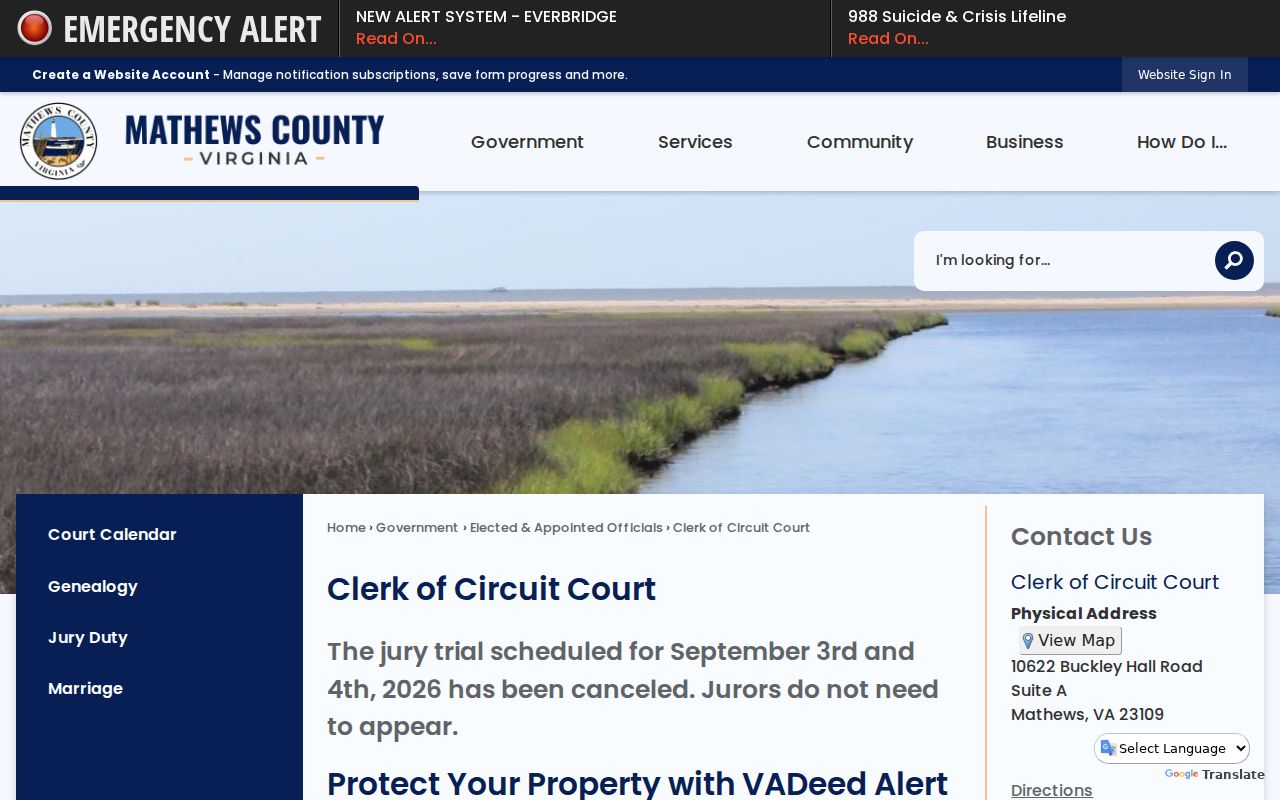
Use that page for current instructions, then confirm any specific instrument with the Clerk's office.
| Deed or instrument type | What it records | Common research use |
|---|---|---|
| Deed | A conveyance of an interest in land | Trace a transfer and compare the legal description |
| Deed of trust | A recorded security instrument related to a loan | Find later assignments, releases, or satisfactions |
| Release or assignment | A later instrument related to an earlier recorded obligation | Follow the cross-reference to the prior instrument |
| Plat or map | A recorded land layout or lot reference | Reconcile lot labels and legal descriptions |
| Judgment or lien | A recorded claim or court-related notice | Check the exact parties, date, and related case |
Key terms. The grantor conveys an interest; the grantee receives it. A chain of title is the linked history of recorded interests in the land. Book and page is a volume reference, while an instrument number is a document identifier; copy the exact format displayed by the Clerk.
Mathews County Deed Records in Remote SRA Access
The county Clerk page gives December 29, 1995 as the start of remote land-record access. That date belongs to the remote service only. It does not mark the oldest surviving deed. It is not the beginning of every index. It is not a cutoff for the paper and microfilm record. The county publishes no precise date range for the free index, so read the date filters and coverage notes inside the live system before relying on a result. The Virginia SRA/COVERS portal is the remote entry point for Mathews land records. It presents the statewide land-record access screen where searches begin.
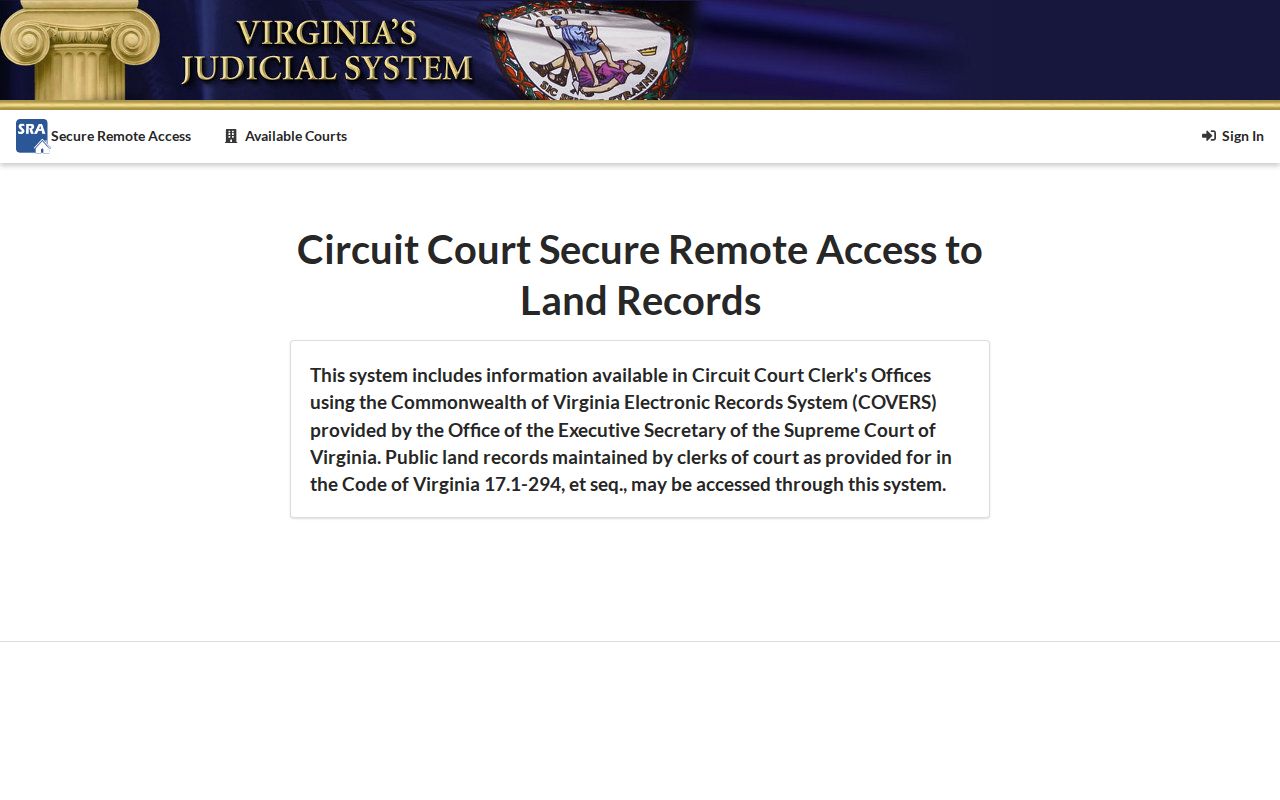
Check the live portal for its current date range. Check its search controls too. Then confirm an instrument with the Circuit Court Clerk. Older transactions predate remote coverage. A thin SRA result may point instead to a counter index, deed book, microfilm reel, or archive catalog. Before asking a clerk or archivist to search, gather the grantor and grantee names, an approximate year, the locality, the instrument type, and the parcel description. Those details make any manual search far faster. The Virginia SRA/COVERS landing page is linked from the Clerk's site. It is an entry point. It is not a guarantee that every Mathews instrument image opens without a subscription.
Image Access for Recorded Mathews Deeds
Virginia's public explanation separates free index access from subscription access to land-record images. Mathews remote images cost $50 per month and require clerk authorization. Access terms can change. Always check the current SRA screen and Clerk instructions before subscribing. The index finds the reference. The instrument image is what lets you read the clauses, legal description, parties, signatures, and recording endorsement. An index entry alone does not prove the listed instrument transferred the parcel the way you expect. The document could be a correction. It could be a partial-interest transfer, a deed of trust, or an estate conveyance. Confirm the type, date, parties, and land description before relying on any result. A subscription image also stays unofficial until the Clerk certifies it. The Virginia courts' SRA access guidance explains the index and image distinction in full.
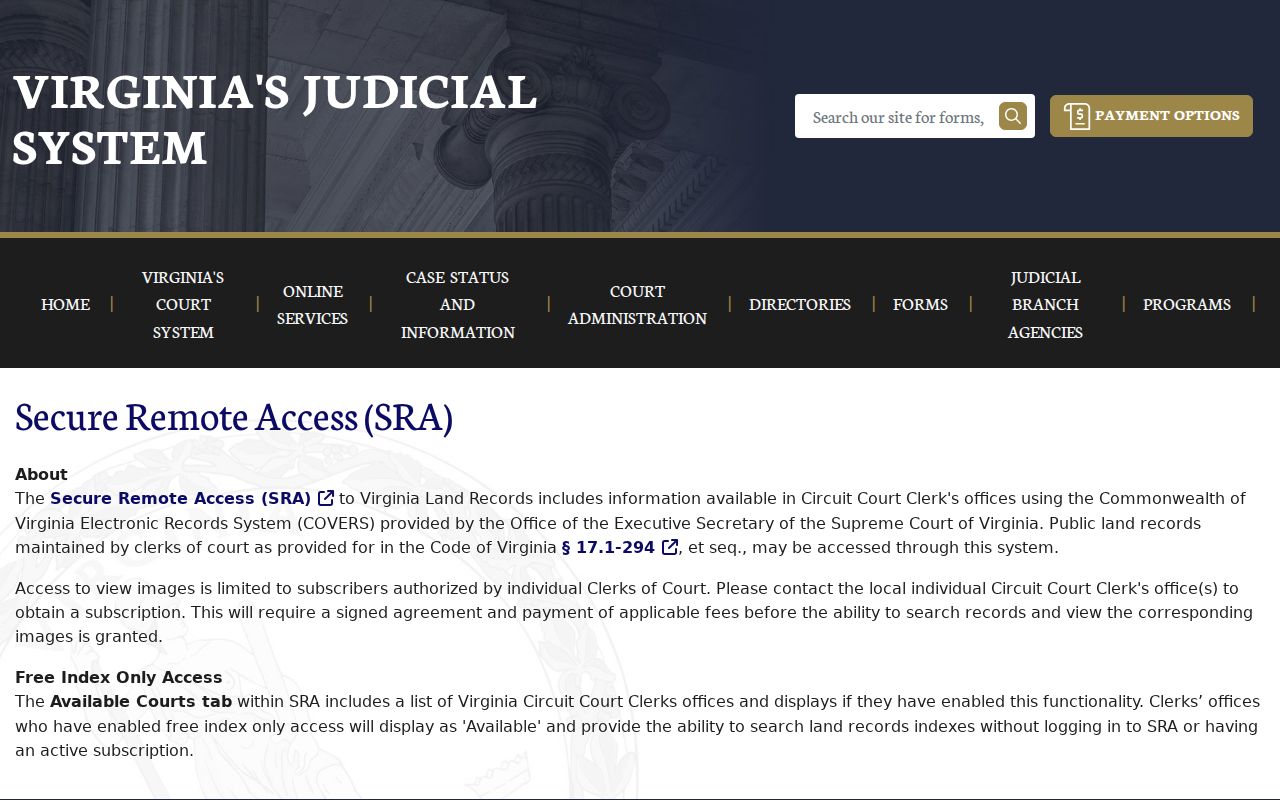
Use the index to locate the reference. When the wording matters, verify the image or a certified copy with the Clerk.
Trace Mathews County Deed Records by Grantor and Grantee
Every deed is indexed by its two parties. The grantor conveys the interest. The grantee receives it. To trace a parcel in Mathews County, find a likely grantee entry, open or request that instrument, then search the same party as grantor to locate the deed by which the land was acquired. Repeat the process with each predecessor owner, checking at every step that the legal description follows the same tract, because parcels split and names repeat across generations of deed records.
- Start with the latest likely grantee and record the date, document type, and exact reference.
- Read the image or obtain a copy, then match its legal description to the parcel.
- Search that deed's grantor as a prior grantee and follow the earlier instrument.
- Repeat while checking for partial interests, plats, corrections, or gaps in the chain.
- For older material, ask the Clerk about counter indexes, deed books, or microfilm.
Names alone can mislead in deed records. A close match may belong to a different person or a different parcel entirely. Estates, trusts, trustees, and companies also show up in the party line of Mathews County instruments. Keep a running chain table. Include the recording date, instrument type, parties, book and page or document number, and description notes. A new deed citing a different lot, exception, or easement can branch the chain. It can also change what land is actually conveyed.
Work backward from the latest grantee instead of chasing random surnames. That approach, plus more on time depth, is laid out in the former-owner guide.
Instruments Found in Mathews County Deed Records
Deed records in Mathews County hold far more than simple sale deeds. A deed of trust secures a loan. An assignment moves a lender's interest. A release or satisfaction marks the end of an encumbrance. Judgments and liens can cloud title. A plat shows how a parcel was laid out. Treat an index label as a clue, not a legal conclusion.
| Instrument | Common research use | What to verify |
|---|---|---|
| Deed | Transfer or conveyance of an interest | Grantor, grantee, consideration if stated, description |
| Deed of trust | Recorded security instrument | Parties, trustee, parcel description, related release |
| Release or assignment | Later change to a recorded obligation | Reference to the earlier instrument |
| Plat or map | Subdivision or parcel layout context | Deed-book cross-reference and exact lot label |
| Judgment or lien | Recorded claim or court-related notice | Debtor identity, filing date, related case |
Pull the document image or a clerk copy before drawing any conclusions. A Mathews index entry alone does not show every column or linked instrument. The recorded document itself settles what the result means.
Mathews County Deed Records, Plats, and Easements
A recorded plat can supply a lot and block. It can also give a subdivision name and its tie to a deed. Virginia law sets recording and cross-reference rules for plats and maps. When a parcel's legal description points to a plat, search by subdivision or party name. Then compare the plat reference against the deed itself. A GIS map helps with orientation. It cannot replace the recorded plat or a survey.
Easements and rights-of-way may be recorded apart from the transfer deed. An older description might mention a road. It might also name an access path, a utility corridor, a wharf, a creek, or an adjoining tract. Along Mathews waterways, those references often hold the key to identifying the land. Never assume a modern parcel outline captures every right or limit in an older instrument.
If a deed cites a book and page, and the image is not online, ask the Clerk about cross-reference and copy options. Keep the instrument number or book and page beside the parcel identifier. That habit makes any later property search precise.
Historic Mathews County Deed Records After the 1865 Fire
Mathews County lost most of its records to an 1865 fire. The source is the Library of Virginia's microfilm inventory. That warning matters whenever an online chain of deed records stops early. Surviving material, later indexes, referenced instruments, tax records, probate files, and local archives can each fill a gap. Some fill land gaps. Others fill name gaps. Still, no single source rebuilds every lost volume.
Before Mathews County formed in 1791, the land sat in Gloucester County. Its deed records may apply. For nineteenth-century research, consult the LVA microfilm inventory. Also consult the local library's land-tax and historical collections. Match an old owner of record against tax lists, newspapers, directories, wills, plats, and adjoining owners. Mark each step as confirmed or tentative. Otherwise an archive clue can be mistaken for a recorded conveyance.
The LVA inventory is available at its Mathews County microfilm page. The image shows the catalog entry and its fire note.
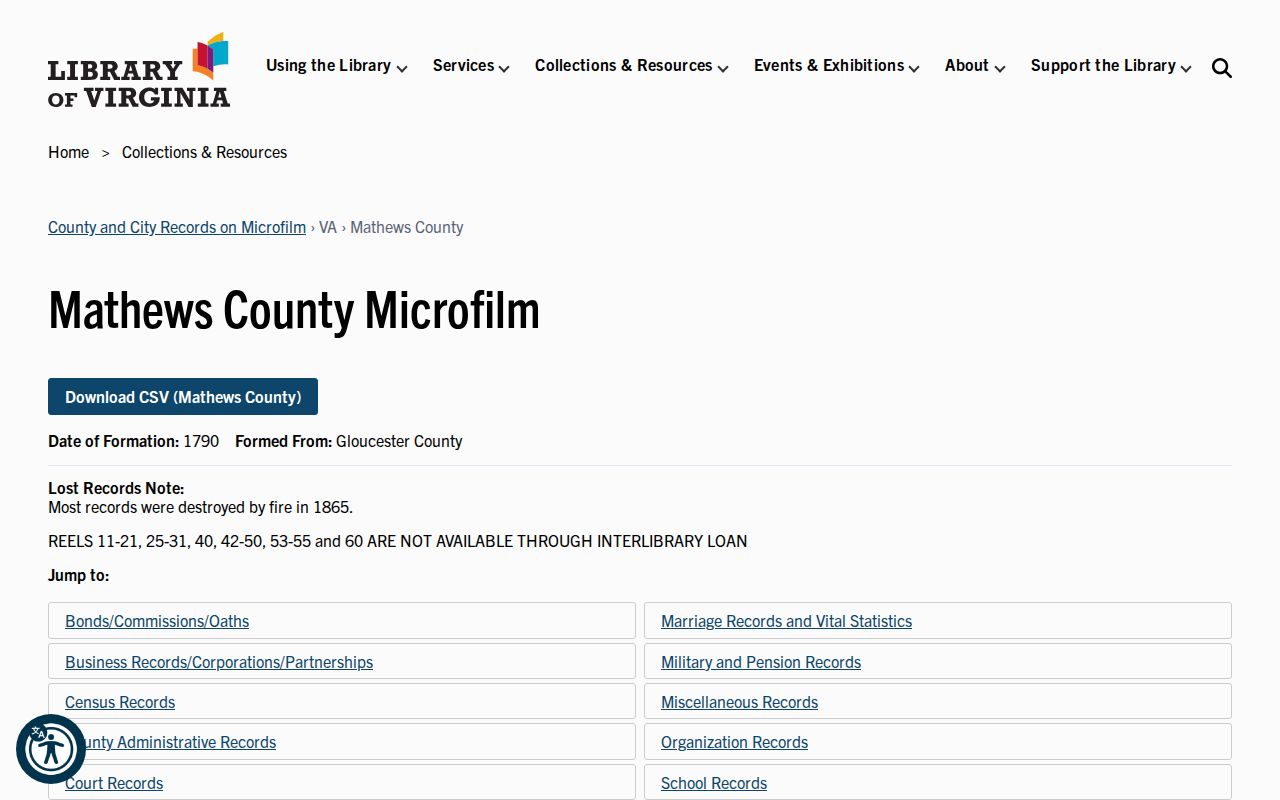
Use the catalog to identify a possible reel covering the Mathews County deed records you need. Before assuming a missing entry means the record is gone, ask the holding repository what that reel actually contains.
VADeed Alert for Mathews County Deed Records
Mathews County points residents to the free VADeed Alert service, which sends notices when certain recorded land documents match a name or a Tax Map/Parcel ID. It works well for monitoring a parcel, especially once you have a parcel identifier handy. Still, an alert is only a flag. It cannot replace a real search of the land-record index, and its current instructions spell out every trigger and result field, so read them before leaning on it.
When a notice lands, open the official SRA index and pull up the underlying instrument. Confirm the party names and the parcel description yourself. Contact the Clerk if you need an official image or a certified copy. Treat the alert as an early signal, not a legal finding about fraud or title.
The county Clerk page carries links for both the service and land-record access. For a separate parcel monitor, use the official VADeed Alert account page.
Counter Access to Mathews County Land Records
The Clerk's public counter sits at 10622 Buckley Hall Road, Suite A. Published hours run 8:00 a.m. to 4:00 p.m. on weekdays. Recording cuts off at 3:45 p.m. Call 804-725-2550 to confirm search procedures. The same number answers questions on current copy charges or whether a record book is on the shelf. Virginia law opens circuit-clerk records to inspection and permits copies for a reasonable fee. Statutory schedules and local practice are best checked with the office directly.
Come prepared. Bring names, likely years, deed references, a parcel identifier, and any clue from the legal description. A request for "all deeds for this name" can be hard to sort from same-name entries. The more you narrow it, the better. Staff may point you toward a deed book, index, microfilm, or request form. They can explain any limits on reproducing records.
Virginia FOIA offers another route to existing public records. Describe what you want with reasonable specificity. The public body must then respond within five working days. Otherwise it must send written notice of an extension. Charges may cover actual costs.
Limits of Mathews County Deed Records
An index search has blind spots. A misspelled name, an old instrument, or a separately recorded easement can slip past it. So can a filing where the party name differs from the current owner of record. A deed image can also be hard to read. It lacks the prior instrument or a current survey in hand. Remember that a recorded deed shows what was filed. It does not prove that no competing claim or boundary dispute exists.
For real due diligence, match the newest deed to the parcel description. Then review any related instruments in the deed records. When legal reliance matters, get professional title work. For a boundary question, pull the recorded plat and talk with a licensed surveyor. Never use a public name search to harass or target a person.
Legal limit. A deed search is a way to find recorded evidence, not a title opinion. Ask a title professional about legal reliance and a surveyor about a disputed boundary.